
Algorithms Program You to Stay

When I still had an Instagram account, I couldn’t sit down to a meal without first making it a photoshoot. Even a workout at the gym had to be a public session. The urge to share my life with the world meant nothing was private anymore.
When Instagram banned me, I expected to feel the loss, but instead I felt free.
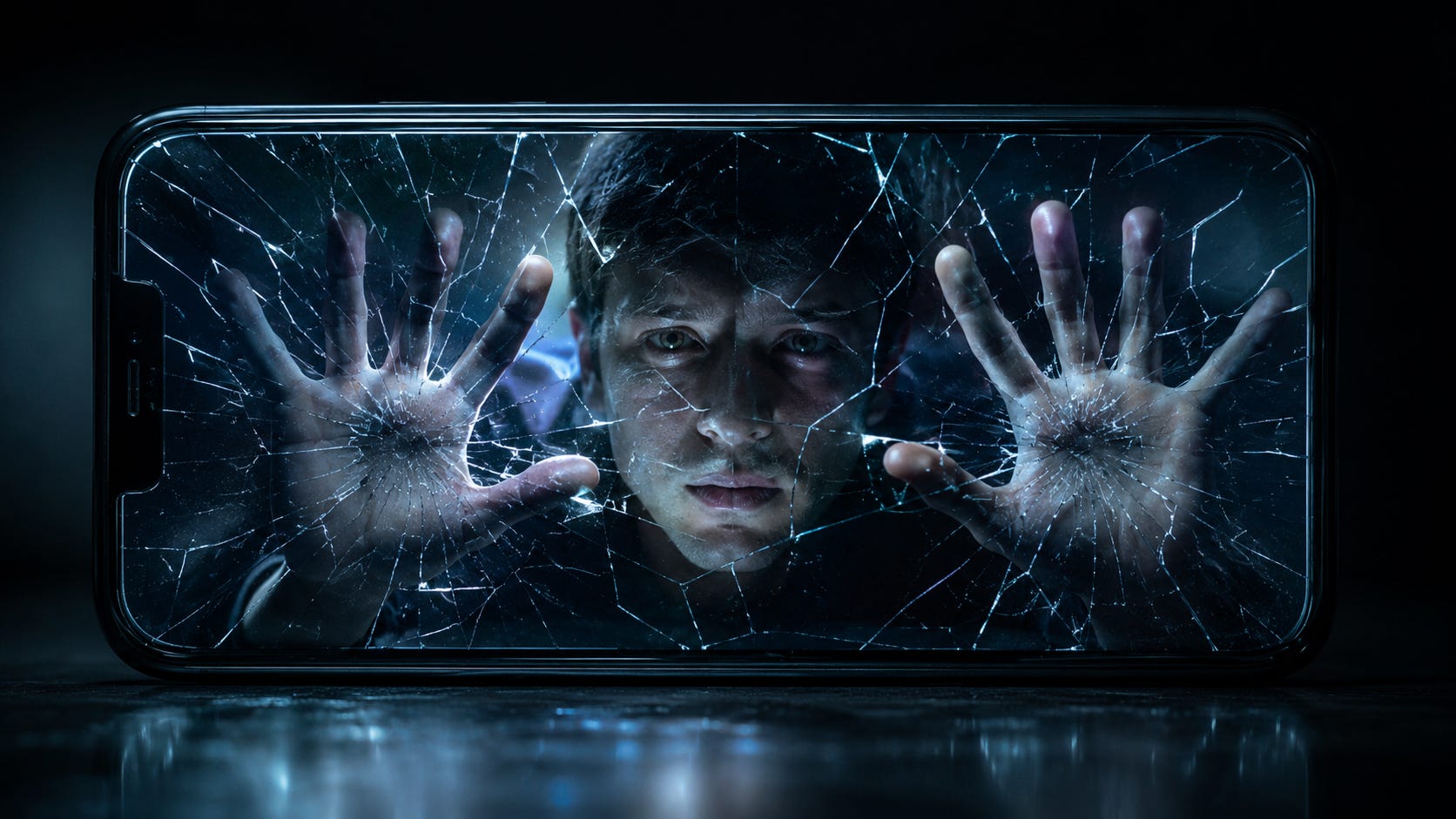
That small, almost embarrassing revelation turned out to be a window into something much larger, a system designed not to connect you to the world but to capture your attention, reshape your identity, and keep you locked in a digital cage you mistake for a public square.
The Conflict Machine
Social media platforms present themselves as neutral spaces for human connection. But this couldn’t be further from the truth. They’re not neutral; they’re optimization engines that are optimizing for engagement, which is not based on your well-being, your growth, or even your genuine opinion. The most reliable driver of engagement is negative emotion.
On X, the negativity drowns out the positive at a ratio that isn’t accidental. Trending topics are almost universally divisive, engineered flashpoints designed to trigger outrage across the political and cultural spectrum simultaneously. You open the app for five minutes and find yourself in an argument about something that enrages you or had no intention of thinking about, and most of the time, it’s about something you can’t change.
You are hit with two emotions at once: anger plus powerlessness. The algorithm doesn’t just make you furious. It makes you furious about things beyond your control, leaving you depleted, reactive, and hungry for the next hit of outrage to fill the void the last one left behind. This isn’t a bug. It’s the product doing what it was designed to do. You might get some relief laughing at a few troll posts or some funny AI-slop videos, but they aren’t enough to counteract the rage bait.
Engagement algorithms are deliberately engineered to maintain user attention for as long as possible, with features like endless scrolling normalizing prolonged use and increasing addiction risk. What’s less often discussed is what kind of attention they cultivate. It’s not the focused, generative attention of someone reading a book or building something. It’s the feverish, reactive attention of someone perpetually on the edge of a fight. How healthy do you think being constantly in “fight mode” is for the human psyche?
The Anons
Step back from the algorithm for a moment and look at who it’s amplifying.
The most timid person you know in real life—the one who would never dream of insulting you to your face—becomes a ferocious voice online. Behind an anonymous account, armed with an avatar instead of a face, ordinary people unleash a version of themselves unbound by the social contracts that govern civil discourse. The mask comes off; nay, a different mask goes on.
Anons dominate these spaces in a way public figures can’t. Public accounts come with accountability—your name, your face, and your reputation are on the line with every post. Anons carry none of that weight. They can say the unsayable, escalate without consequence, and retreat without cost. The result is an environment where the worst impulses of human nature are not just permitted but rewarded with attention, engagement, and the dopamine hit of a successful provocation.
This is not how people actually are. It’s how people perform when social norms have been stripped away and replaced with algorithmic incentives. Cyberspace has become a world where the ordinary rules of human interaction do not apply, and into that vacuum rushes everything we normally suppress.
The interplay between altered brain physiology and AI-driven content optimization creates a feedback loop that promotes addiction, but the deeper damage may be cultural rather than neurological. When the worst of human expression dominates a space that billions of people inhabit daily, it begins to feel like reality. The digital battlefield starts to seem like the world when it isn’t.
The Peace You’re Missing
I just took a few days off from posting on X. The first thing I noticed was not freedom or clarity but the absence of anxiety. No topic shoved in my face the moment I checked my phone. No argument pulling at my attention before I’ve had my coffee. No trending outrage demanding I pick a side before I’ve had time to think. Just a piece and quiet, away from all the engineered noise.
What you must realize is that the platform becomes your ambient environment. Its mood becomes your mood. Its battles become your battles. And when you step away, you don’t just feel calmer; you feel like you’ve left a war zone you didn’t even realize you were in.
The irony is that most of the battles mean nothing. Online activism, for all its fury, rarely translates into real-world change. The callouts, the rants, the ratio wars, and the viral pile-ons are not congruent with the kind of sustained, coordinated effort that actually moves institutions. They are expressions of frustration, not exercises of power. The algorithm gives people the feeling of resistance while ensuring they remain exactly where they are: scrolling, reacting, and generating data.
When was the last time you saw George Soros or Bill Gates spending their time arguing with anons, or anyone for that matter, on any social media? Never. The movers and shakers are too busy moving and shaking the world, not wasting their time glued to a screen.
And think about this: having all of humanity staring at a screen, engaged in never-ending CAPSLOCK shouting matches on the Internet, taking no real action, is precisely where a technocratic elite would want them to be.
What Is Social Media Really?
For many people it’s a form of gestalt therapy, a space to externalize internal states that have nowhere else to go. The frustrations, fears, and grievances that polite society demands we suppress find expression on the feed. In this sense, the platform does reveal something true: how people actually feel beneath the performance of everyday life.
For others, it’s pure fantasy. Anonymity and curated personas allow people to present themselves as more powerful, more attractive, and more certain than they are in private. Some perform perfect lives for audiences who are themselves performing perfect lives. Some perform righteous fury for audiences who want to feel that someone, somewhere, is finally saying what needs to be said. The latter was me: I gave millions of people raw and emotional rants that they wanted, and I exploded in growth because of it. But while I thought I was doing the right thing, I became a useful idiot, a boogeyman to be pointed at by the system while the people rewarded me with praise.
Here’s what makes this more than about human psychology: all of it is being recorded.
Every outburst, every confession, every whispered grievance is data. Tech companies mine it for advertising profiles with a granularity that would have seemed dystopian twenty years ago. Governments, and not just authoritarian ones, monitor it for dissent, sentiment, and patterns of organization. Social media has become the place where ordinary people whisper to each other that the emperor has no clothes, openly and loudly, for the emperor himself to hear the recording.
The Digital Cattle Farm
If you were a technocrat who wanted to neutralize a population’s capacity for organized resistance, you could not design a better tool than the modern social media platform: take people’s genuine frustrations, give them a space to safely express those frustrations endlessly, and make the expression feel like action. Monetize the space so grifters, conartists, scammers, and criminals become ranchers, herding and beefing up their cattle for profit. Ensure the space rewards division over coalition, outrage over strategy, and performance over organizing. Then sit back while the people fight each other in a digital arena that generates no real power, while the actual levers of power remain untouched.
What a perfect way to keep these animals in their own pen.
Whether my conspiracy theory is true or not, social media companies want to make money. It doesn’t require malicious intent at the top of every platform, only the cold logic of an optimization system that rewards engagement and is indifferent to consequence. Selling data to anyone, including governments, is always profitable. So the outcome is the same regardless of intent.
What This Means for You
I’m not arguing for a life without social media. I just want you to understand what these platforms are actually doing to you and make sure that you are using them instead of them using you.
You should take breaks from time to time, because the time off is healthy for you. Don’t believe me? Notice what you feel when you open any social media app. Notice whether you are calmer or more agitated after ten minutes. Notice whether the topics you are being drawn into are ones you chose or ones that were chosen for you. Notice whether the version of yourself that shows up online is the one you want to be.
Be honest.
The algorithm is not your friend. Social media is free because you are the product. It’s also not your enemy either. It’s a machine that doesn’t know you exist, designed to turn your attention and emotions into dollar signs.
I, like many others, get my news from X. The whole world is online. The Internet has done a lot of good for humanity. But what humanity is doing to itself on the Internet is another story.
Take a break when you feel overwhelmed. You’re not going to miss out on anything. The world isn’t going to end because you don’t post on social media for a day or two. You only think it will because you now have the world in the palm of your hands.
Well, you actually don’t.
And while you focus on and drain yourself by getting sucked into this digital matrix, you miss out on the real world that is your life.
You should focus more on that than anything else.