
Community Capture

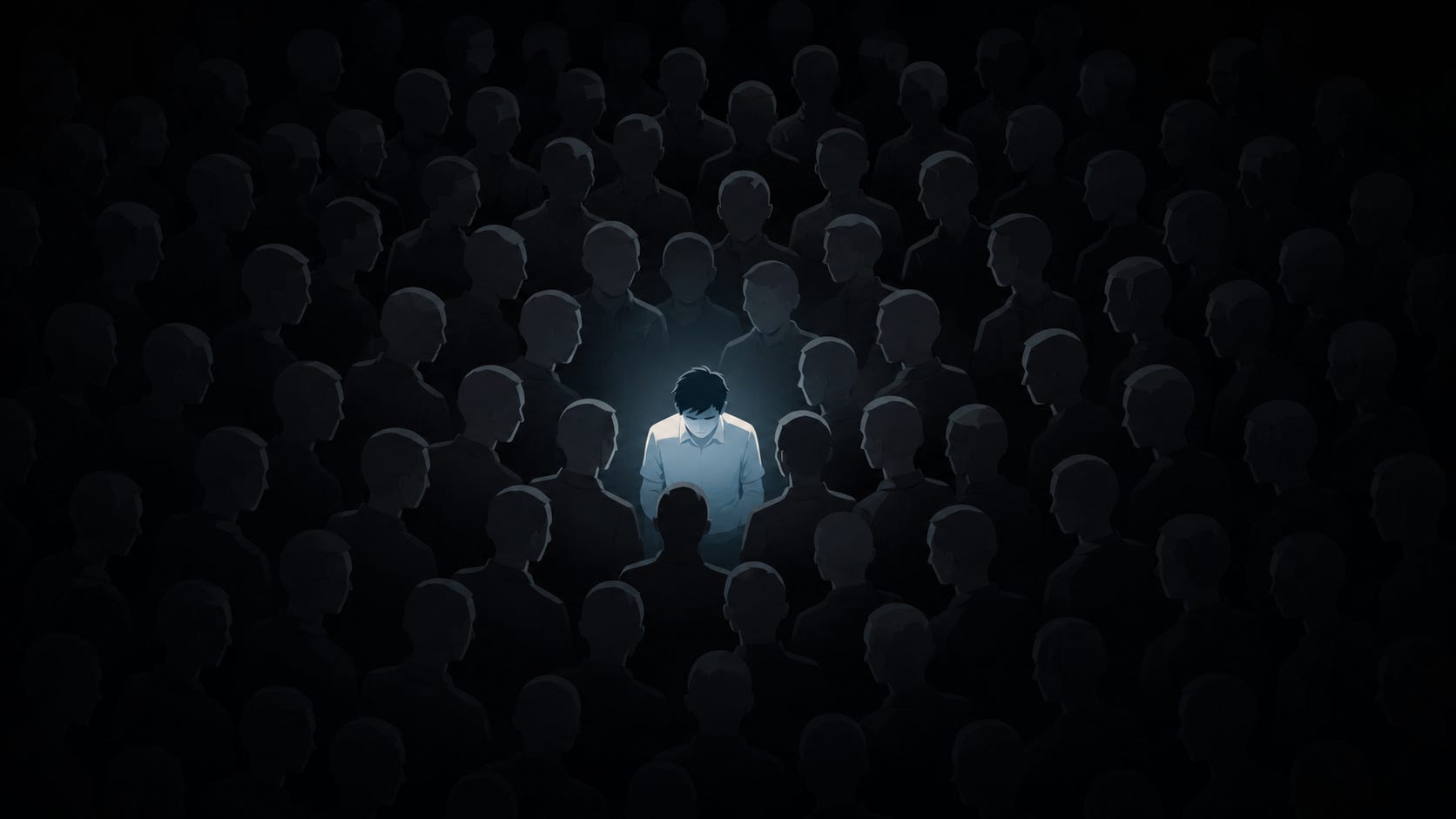
Audience capture is the phenomenon where content creators slowly become prisoners of their audience. I realized this happened to me last year when my friend Adam Green brought it to my attention. I asked him what he meant, and he said that I was chasing engagement, mirroring back what my followers wanted to see, and that my audience was influencing me rather than I influencing them.
I realized he was right almost immediately because the entire time I was lowering my standards to not only reach the masses with my “drill instructor schtick”—based on emotional rants and other attention-grabbing theatrics—I was afraid to “lose” my audience because I believed the more people who were awake, the better, and in order to awaken more people, I had to hold my tongue regarding certain topics to create a big tent, which I believed was the only way forward.
Audience capture explains a kind of conformity that requires an exposed identity, a following, and something to lose. It’s mostly an influencer/creator problem. But what I’ve noticed lately while I observe all the reactions to me leaving the JQ is something different that operates on everyone, including people with no public identity at stake whatsoever.
I call it “community capture.”
Just sit back and observe the behavior of anons in these spaces. These people have no face, no career, no reputation attached to their posts. By every metric, they face zero consequences for going against the grain aside from possibly losing their social media account. Yet, they police themselves, stay in line, and even self-censor in real time.
The standard assumption is that anonymity liberates, that removing external stakes frees people to say what they actually think. In most cases it does. But in community contexts, I noticed something else happens.
I pondered on what the underlying driver of such behavior is. The fear isn’t of external consequences, so what is it? It’s fear of rejection, of exile, of being the one who doesn’t belong anymore. We humans are social creatures; even being rejected as an anon hurts, just without the consequences a public figure faces. A man on a dating app who doesn’t get the match he wanted is hurt by a woman he doesn’t know at all. Someone gets unfollowed by an account they were friends with over the years, and they feel similar pain, although they’ve never met in real life.
This is a fear of losing your people, and it will override your actual views even when no one can trace those views back to you.
What separates community capture from audience capture is the mechanism. Audience capture is incentive-driven—you get shaped by what your audience rewards. Community capture is attachment-driven—you get shaped by what your community will tolerate. The former requires a platform and a brand, while the latter only requires being human with a need to belong.
I also concluded that community capture is worse in niche communities: worst of all in conspiratorial or ideologically extreme ones.
Why?
Because in mainstream communities, your worldview and your membership are separable. You can leave one political party and join another. You can change cities, switch friend groups, and find a new church. Although the fear of rejection is still there, the community you just left is replaceable because alternatives exist at scale.
In fringe communities, these alternatives are not as available. The worldview and the community become fused because no other community shares that worldview in any significant number. You can’t take your beliefs somewhere else, because nowhere else will validate them. You can’t leave the beliefs behind, because they’re the reason you’re there in the first place.
Add to this the internal logic of most conspiratorial communities: we see what others don’t. This shared possession of hidden knowledge is part of what holds the group together. The outside world isn’t just unfamiliar; it’s framed as asleep, compromised, or hostile. This means that when you contemplate leaving, you aren’t just losing friends; you’re losing who you believe are the only people on earth who confirm your version of reality.
The Flat-Earth community is 100% wrong about their beliefs, yet I’ve seen some of the harshest responses to their apostates, from doxing to death threats. The more recent apostate from the FE community is a man named Jeran Campanella, who was a huge FE influencer and true believer. Because he’s an actual truth-seeker, he accepted the invitation to the Final Experiment in Antarctica. The event was live-streamed and proved there’s a 24-hr sun, which exposed the lies of the FE narrative.
I saw the reactions to his departure came with the same vitriol and conspiracy theories I’ve seen with my departure from the JQ: “Jeran has always been a fed.” “I never trusted that guy.” “He was a nobody (despite being one of the biggest). “He clearly took the money.” None of these flat-earthers engaged with any of his points; all they did was attack him. The claims and attacks against him are identical to the claims and attacks I’ve seen toward me. This shows that community capture is universal.
It also shows why people stay in communities that cost them enormously and why they double down instead of walking away. The community doesn’t need to threaten you explicitly—the threat is structural. Leave, and you lose everything: the relationships, the framework, the sense of being one of the few who actually understands what’s going on. And of course there’s also the risk of being doxxed and all the rest of it, should the most unhinged members of your former community be inclined to punish you beyond the Internet.
Community capture isn’t a character flaw. It isn’t stupidity or weakness. It’s what happens when the need to belong gets fused to a worldview with no exit ramp. Jeran Campanella stood in Antarctica and watched the sun that wasn’t supposed to be there. He could have looked away. He didn’t. Instead, he realized his beliefs were wrong, and then he told the truth.
This is what community capture can’t survive: when someone decides that what’s true matters more than where they belong. Understanding the mechanism won't change that for most people. But for the ones it does reach, it might be enough.