
Performance is Not Philosophy

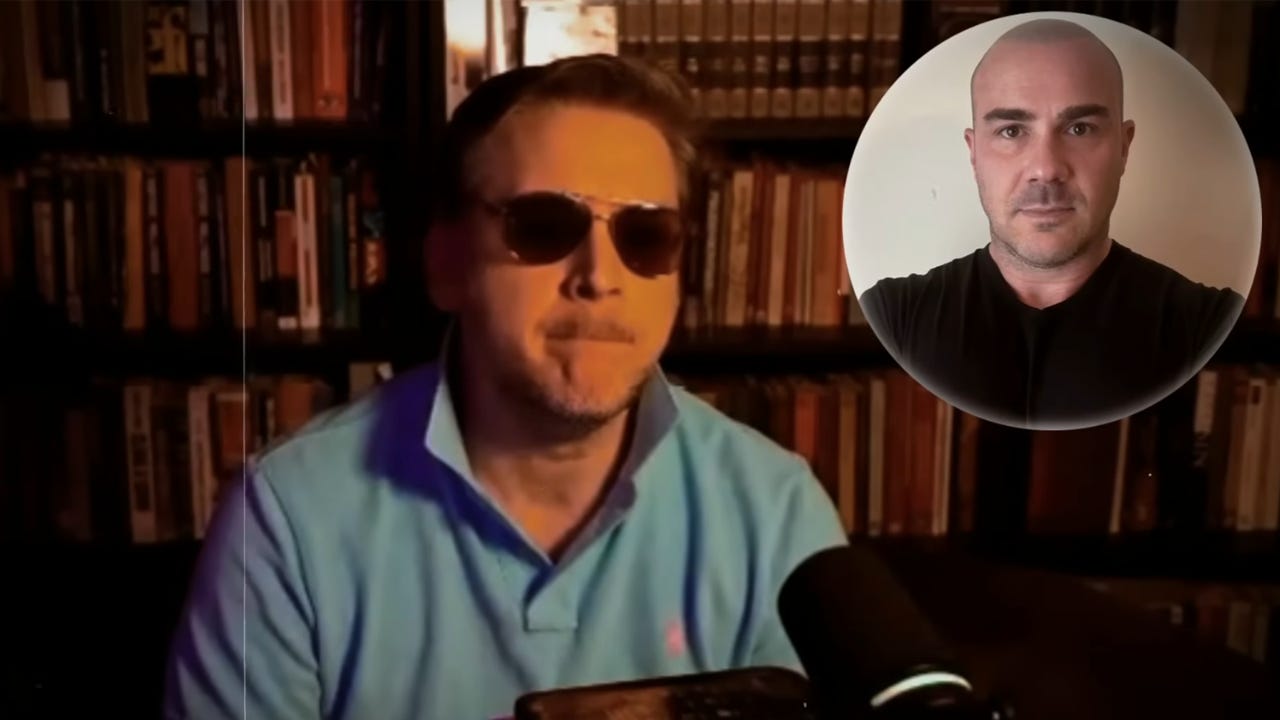
I wasn’t going to write this. But months later, childish comments from Jay Dyer fans haven’t stopped. In fact, just two days ago, someone left a comment on my YouTube telling me I got “wrecked” by Jay. You can watch the “debate” here, and see all the comments from all his fans saying the same.
Allow me to do something his audience apparently can’t: actually analyze what was argued, using the transcript as the record.
I’ll be honest about where I screwed up, since I have no problem with being wrong. I wasn’t prepared to go into any debate that night. In fact, I haven’t debated anyone in 14 years. I went into Jay’s space in good faith, as someone who used to watch his livestreams. But it seemed he was upset with a post I made about science denial that had him in it. There was an animosity that I didn’t expect, which caught me off guard.
Regardless, I made mistakes, and that’s fine. But I’m going to show exactly what Jay never engaged, where he made mistakes, and what he ultimately conceded without acknowledging it.
What Actually Happened
The debate started with evolution, but it eventually turned into one about epsitemology and metaphysics.
On the evolution part: I cited the Ensatina salamanders as evidence for ring species speciation. Jay laughed at it. But laughing is not a refutation. I brought up the fossil record, and he dismissed it as proving nothing. At no point in the exchange did Jay disprove evolution. So how did I get “wrecked” on that front? I didn’t. He performed skepticism.
While he continued to be skeptic about evolution, I made a claim about our inability to access Justified True Belief (JTB) on an ontological level. I was not making a first-order metaphysical claim about the nature of reality. I was making a structural claim about what JTB logically requires as a framework, and arguing that those requirements exceed what finite human agents can satisfy. This is a claim about the preconditions of knowledge, made at the level of logic and mathematics. It’s the kind of claim philosophy makes all the time.
However, Jay treated it throughout as if I were claiming to know an absolute truth about reality itself, then pressing me on how I could know that without contradicting myself. That objection would be valid against a different claim, but it was never valid against the claim I was actually making. I pointed that out repeatedly during the exchange, literally six times.
The Universal Quantifier
The central charge Jay leveled was that my claim—“we cannot obtain JTB”—was a self-refuting universal. His argument: “no one” and “we cannot” are universal quantifiers and making such a claim while denying humans can have justified universal knowledge is a contradiction.
Here’s what the transcript actually shows. I constrained the claim to human agents as finite beings not once, but six distinct times:
Lucas: You and I, as human beings, because we’re finite creatures—you will argue God has that.
Lucas: I said humans. I said we, as agents—you and I, human beings—we cannot obtain justified true belief.
Lucas: I’m not saying God can’t do it. You’re strawmanning me.
Lucas: This is my point—I said we as agents, you and I, human beings, we cannot obtain JTB.
Lucas: We’re talking about humans, Jason. Why do you keep going to God?
Lucas: And we’re limited.
Jay’s response to each of these was identical: “it doesn’t matter.”
Jay: It doesn’t matter that you keep saying ‘human beings.’ It’s a universal claim.
But it does matter. Enormously. A claim scoped to a domain is not the same as an unrestricted universal. “No human being can run 100 meters in one second” is a universal claim about humans; it doesn’t refute itself by virtue of being stated by a human. Asking me, “How do you know that no human can get JTB ontologically?” is as ridiculous as asking me, “How do you know no human can run 100 meters in one second?” The scope constraint carries real logical weight, and simply asserting “it doesn’t matter” is not a counterargument.
What Jay needed to demonstrate was why constraining the claim to finite human agents fails to dissolve the self-refutation charge. He never demonstrated it. He simply repeated the charge, ignoring the scope constraint each time, and called repetition a victory. In fact, his fans have run the same move for months. “Isn’t ‘we can’t have JTB’ itself a JTB?” The answer is no, and the reason reveals exactly what was being missed the entire exchange.
That objection confuses two different levels of claim. I was making a metalevel, structural claim about the logical conditions that extrinsic knowledge requires. If I were saying that human’s can’t obtain JTB analytically, that would be self-refuting. But my claim was an object-level assertion about reality that would itself need to be empirically warranted. You don’t need JTB to identify what JTB structurally demands, just as you don’t need to run 100 meters to analyze what running requires. The map is not the territory. Theists, who think JTB is knowledge, make this same category error to this day, while telling me I got “wrecked.”
SIDE NOTE: This is the problem with JTB being the definition for knowledge. It can cause confusion because there’s two kinds, a priori and a posteriori, which are not the same, yet share the same JTB label. This is why my epistemic model correctly labels knowledge with two warrants: Justified Coherent Belief (JCB) for instrinsic claims, and Justified Reliable Belief for extrinsic claims (JRB). And these are two are non-arbitrary warrants, which emerged by structural necessity from the PIE Syllogism, whereas JTB was invented arbitrarily by philosophers.
For those interested in what I mean, here’s my paper on JTB Is Not Knowlege. Although this has the older, five-premise version of PIE, the structure is the same.
What I’m Owning
When Jay pressed me on what “universal” means and I responded by asking whether human beings exist in all times and all places—that was a mistake. Possible worlds has nothing to do with whether humans physically exist across them. He correctly identified it as a category error.
I also didn’t define a transcendental argument on the spot when he first demanded it. These types of debatebros engage in these “You don’t even know what X is,” which is a form of ad hominem to try and undermine their interlocutor in front of their audience. It’s part of their script. What I know or don’t know is irrelevant to my arguments. I didn’t feel like playing definition games mid-exchange—I even said, “Oh here we go with this whole uh…?” Which I get cut off by Jay, “So, you don’t actually know.” And I say “No” in response that I do know. But he read it as evasion and he exploited it.
Regardless, these were real stumbles. I own them. But here’s the distinction Jay’s audience has consistently refused to make: stumbling on articulation under constant interruption is not the same as being wrong on substance. He treated every articulation error as a substantive refutation while leaving the actual argument—the analytic/ontological distinction, the scoped universal, the structural account of JTB—entirely untouched.
You don’t win a philosophical exchange by cataloguing your opponent’s in-the-moment stumbles. You win by answering the argument, which he never did.
The Transcendental Irony
After booting me from the call before I could explain what PIE was, which would have been directly relevant to disarming TAG, Jay told his audience that I don’t know what a transcendental argument is.
But during the exchange, he asked me to steelman TAG. You can’t steelman an argument you don’t understand, and yet I did. The claim that I lack basic competence with transcendental arguments is directly contradicted by the exchange itself.
His Concession
This is the moment his audience has consistently failed to process.
After pressing me throughout the exchange on JTB, I asked Jay directly: what is your epistemic model? Foundationalism? Coherentism? Infinitism? His answer:
Jay: I’m a revelation theorist. I believe in divine revelation, which is none of those secular models.
Think carefully about what that concedes.
If the solution to the JTB problem requires appeal to divine revelation—to an epistemic source entirely outside finite human cognition—then he has just confirmed my core claim. Humans, operating as finite agents without divine epistemic access, cannot ground knowledge through their own cognitive resources alone.
Toward the end of the debate, which isn’t shown in the clip that’s on his clip channel, Jay finally said, “I agree we cannot have direct access to JTB at that level,” which is what I was arguing the entire time!
So, a “debate” which was not formal, that was full of strawmen and ad homimens, where we both made errors, and which then ended with conceeding to my point means I got “wrecked”? Only a fool would think this.
What “wrecked” means in the debatebro world is that I didn’t answer fast enough. I didn’t perform well enough, after fourteen years of zero debates, just jumping into a space thining I was talking to a friendly. That’s the standard being applied, not whether the argument held, but whether it was delivered with sufficient speed and showmanship for a debate-bro audience.
Jay spent the exchange attacking my articulation instead of my position, hyper-focusing on one alleged self-refutation without realizing he was also making a category error, and in the end, adopted a model that requires my conclusion.
What the Post-Call Commentary Reveals
After I left the call, Jay told his audience:
Jay: This is what happens when people get a smattering of introductory-level philosophy and then think they’re competent to speak to the most difficult, challenging matters in the history of philosophy.
Jay: It literally comes down to: just trust my intuition. Trust me, bro.
Two things about this.
First: I was not on the call to respond. Character assessments delivered to a friendly audience after the guest is gone are not philosophical engagement. They are crowd work.
Second: Intuition in philosophy isn’t an appeal to irrationality; it’s what allows a thinker to detect when something sounds like a contradiction, which is precisely what I was doing throughout the exchange. Jay failed to even intuit what I was saying. I was making a structural argument about the logical preconditions of knowledge, the precise opposite of a “trust me” appeal.
The PIE framework I referenced is a formal, account of how knowledge acquisition works structurally. It is currently in peer review. Reducing that to “trust me, bro” is not a characterization. It’s a misrepresentation.
The Paper
My PIE paper has been publicly available throughout this entire period, with several thousand downloads, which is unheard of for a non-academic philosopher. Jay’s audience has mocked it and attacked it relentlessly since the exchange. I’ve presented PIE to every one of his followers who engaged. As of this writing, not one person has refuted a single premise. Not one! They have disputed conclusions, questioned credentials, and recycled the talking points from the debate. The premises stand untouched, while they engage in childish mocking and nothing more.
If the framework is as incompetent as claimed, and I have no idea what I’m talking about, then it should be easy to demonstrate. In fact, the debate between Jay and I inspired me to write another paper title “Justified True Belief Is Impossible,” which has 500+ download on Philpapers, and not a single refutation.
I also have a total of four papers submitted for peer review, each advancing a novel argument and contribution to the literature. PIE is the most significant. But apparently I’m a “noob” because I got “wrecked” in a space controlled by a bad-faith opponent performing for his audience.
The Broader Point
When a debate clip functions as a defeater, but a paper that cannot get a single premise refuted after months of sustained attack, something has gone seriously wrong with how truth is being processed in these communities. This why I continue to say that the debatebro, bloodsports have poisoned philosophy.
This is the real subject of this piece. My “debate” with Jay was just another example of it. Jay’s audience watched him interrupt, reframe, and deliver post-call crowd work, and concluded that the argument had been answered.
Performance is not philosophy.
My Challenge
I would welcome a formal debate with Jay, moderated by a neutral party, on a single question: why TAG is not a genuine transcendental argument, and why PIE is its structural counter. He can read my paper, “TAG is Not a Trancendental Argument,” in advance and prepare his defense. I doubt he will take my offer.
I extend the same offer to any interlocutor from that community who wants to engage the argument seriously. I doubt any of htem will. Since PIE was introduced, the serious engagement vanished, while the jabs on X or YouTube kept coming. But you can’t refute my position with childish jabs. You can’t “wreck” a paper by leaving comments. You wreck it by refuting a premise.
I’m still waiting for someone to refute a single premise of PIE.