
The Impotent Intellectual

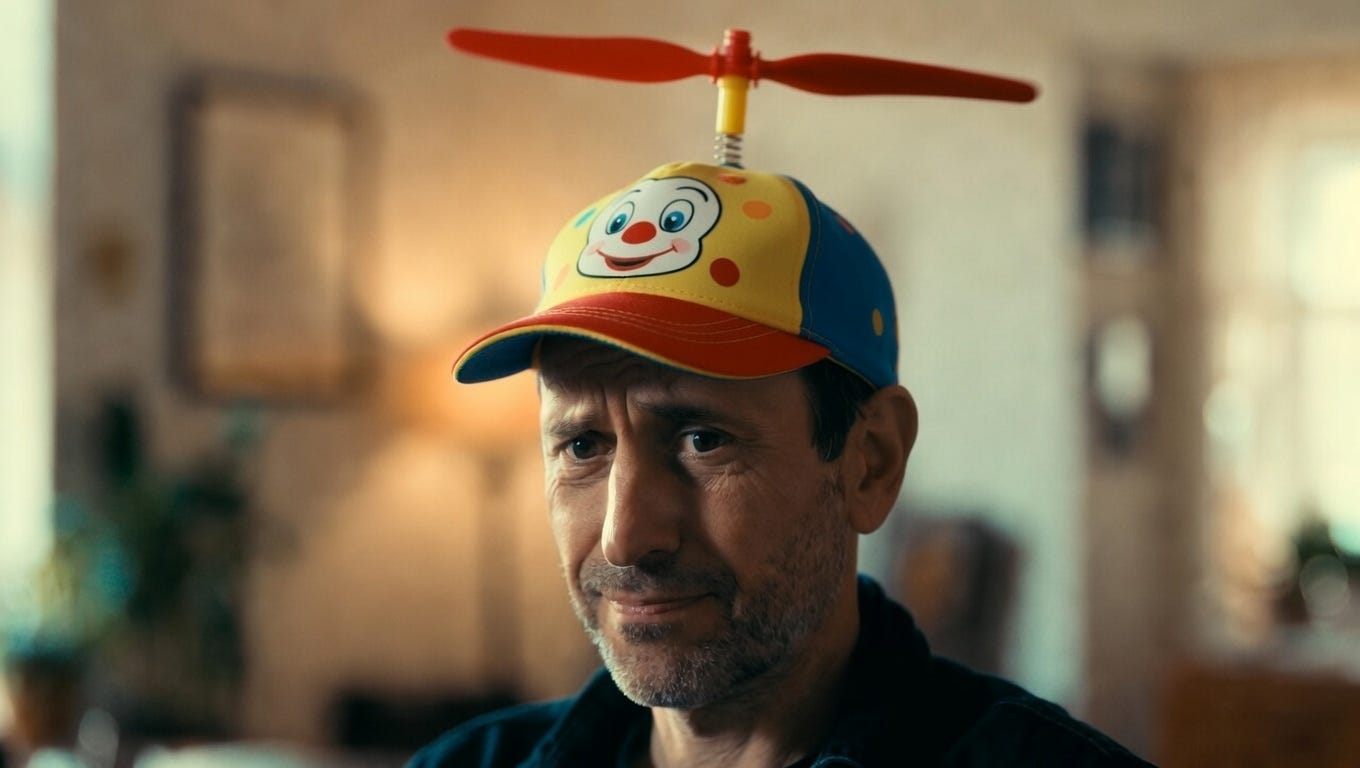
For the last several years I have had my foot in both the non-intellectual world and the intellectual world—publicly in the former but privately in the latter. I am the kind of person who likes to sit back and observe things in order to learn how they operate. I analyze systems as a whole and find contradictions and ways to solve those contradictions. I am a big-picture person. However, the activism that I was engaged in for the last three years in particular was very non-intellectual, driven mostly by pathos—the execution of emotional rhetoric to move the crowd, which was at the time extremely important to do in order to overcome enemy propaganda and terminology.
What I noticed, however, is that in these circles there are many so-called intellectuals who pride themselves on how many things they know, whether it be history, a particular subject, or just having an extensive vocabulary, which most people do not have. These people position themselves as authorities and look down upon those who do not know what they know. But this arrogance is exactly what breeds an impotent intellectual, which I will address in this article.
We see these types of intellectuals dominate the so-called debate bro culture that exists on YouTube and on the accounts that dominate social media. It shouldn’t come as a surprise that we have seen many of them turn out to be absolute frauds—either lacking the credentials they claimed or having no actual idea what they’re talking about when pressed, spewing narratives that are not even verifiable or have already been proven to be false.
The reason these people are even able to grow is because they thrive in their echo chambers, protected by their audience, and thus insulated from critique. But all one needs to do is look at the fruits of their labor, and you will see that their trees lay barren.
Most of the time, these so-called intellectuals do not produce anything novel of their own. Their intellectual capacities amount to nothing more than repeating the arguments and beliefs of other men before them—either alive or dead—knowing factoids about niche subjects, or having a more extensive vocabulary than the average person. And to the average person, this display of knowledge makes them seem so intelligent. This works because, let’s be honest, the average person is so lazy and uninterested in learning more, they are essentially stupid by choice.
So the lazy masses view these impotent intellectuals as thought leaders, yet where are their original thoughts? They have none because they are nothing but walking encyclopedias. They do not advance humanity; they actually reinforce the status quo. The people who have always advanced humanity are those who have the best metacognition—who are able to think outside of the box, develop new things, change the status quo, and move humanity forward.
Although these impotent intellectuals are not thought leaders, they could be great educators. Why? Because education is about teaching others what we know. All they do is talk in circles about what they know and repeat themselves ad infinitum.
I am not here to condemn such people, but they need to know their place. Most of them are puffed up on their egos, believing they are superior to others simply because they have more information. But information in and of itself does nothing if it is not used properly. The proper use of knowledge is wisdom, and many of these intellectuals are not philosophers—they do not think about thinking. And even those who claim to be philosophers are not philosophers at all: simply look at the "debatebro sphere" on YouTube to see plenty who say they are philosophers yet engage in nothing but performative eristics. Where are their own philosophical ideas? Nowhere to be found. It is for this reason I find the debate bro culture a disgrace to philosophy—because the gap between claiming wisdom and actually possessing it is precisely what separates the impotent intellectual from the genuine thinker.
The debate bro sphere is purely for entertainment; it has become popular because it helps reinforce the confirmation bias that drives both sides. Have you ever seen one of these debates truly engage in a civil, philosophical discourse? No. It’s all about the clip-farming, “owning” the other side (even though they can’t prove it wrong), and appeasing the mob each interlocutor has amassed so their financial resources can be further extracted.
What a shame.
These people would be better off spending their energy educating people on their particular position while humbly admitting they do not know if their position is true. But of course, they won’t do that, because their arrogance and ego drive them forward—which is problematic for everyone watching and engaging.
Socrates once said, “I know that I know nothing.” This is a sign of humility from one of the greatest thinkers in our history, and yet, people who can’t hold a candle to Socrates go around acting like they know everything. I have always found that both hilarious and sad at the same time.
Humility and the acknowledgment of not knowing are signs of someone with genuine metacognition. The dumbest people, meanwhile, are certain in what they know and will say that anyone who disagrees with them is an idiot. But the same is also true of these impotent intellectuals, who keep bringing up the Dunning-Kruger effect when they are in fact embodying it no differently than the dumbest idiot.
The impotent intellectual has dominated not only the debate sphere but also the political sphere because the masses want to hear what they want to hear rather than what they need to hear. Such a task is easy for him. He is more than happy to repeat himself since he loves hearing the sound of his own voice and being applauded by a crowd that doesn’t know any better. But look how many times these “experts” predicted everything wrong, yet still are being listened to by their followers. I’ve never seen people get more popular for being consistently wrong. It’s only possible because their followers no longer care about facts; they only want to hear feel-good narratives that give them hope.
A true thinker—one who can change the course of humanity—is not seeking the applause of the crowd but rather seeking to correct the ignorance of the crowd. That is why people who change the world are first resisted, considered crazy, and then eventually appreciated—oftentimes when they’ve passed.
But in today’s world, with the Internet and many different peoples able to communicate instantly, the advancement of human knowledge is happening at a much more rapid pace: novel ideas can rise and be appreciated much sooner than ever before. AI is allowing people to unleash potentials that were once gatekept by institutions and their intelligentsia. We are truly entering a new phase of learning and execution.
Game theory predicts that once a certain strategy has been adopted by a critical mass, it is no longer advantageous; the opposite strategy will begin to offer more benefits until it balances out the discrepancy. In other words, the impotent intellectual grift will eventually come to an end, as more and more people realize that these people are nothing more than pseudo-intellectuals, pseudo-philosophers, and charlatans who want to maintain the stage through their vanity rather than their curiosity.
Soon, it will not be about finding thought leaders but developing templates to help people improve their own metacognition so they can think for themselves and contribute to the advancement of human knowledge and, in turn, society as a whole.
Book smart is useless if you never apply it to the world. This is a parasite in all industries